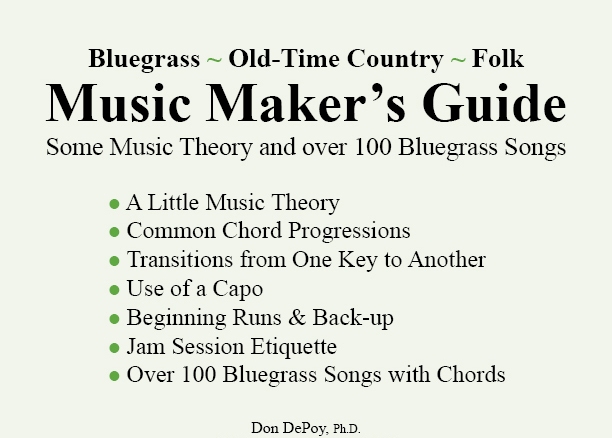
A Little Music Theory
The musical alphabet consists of the letters A, B, C, D, E, F, and G. These letters represent musical pitches and correspond to the white keys on the piano. The black keys on the piano are the sharp/flat notes. A single black key is either sharp or flat depending on the key signature of the song being played. This will be addressed more fully when we discuss key signatures a little later.
As you move forward through the musical alphabet the pitch of each note gets higher. The musical spaces between these notes are called intervals. An interval is the distance in pitch between two notes. The half-step is the smallest unit of pitch (i.e. interval) used in Western music scales.
Chord Progressions or Sequencing chords
After the mechanics of playing, the most difficult task of a budding musician is determining where the melody line of the song is taking the underlying chord structure or where the underlying chord structure takes the melody. Playing by ear is part of the American folk tradition. So it seems natural that there are certain chord patterns or progressions that keep reoccurring across many of the melodies.
After playing traditional musics for over 50 years and examining hundreds if not thousands in the folk, blues, old-country, and bluegrass songs, there appears to be only six reoccurring chord progressions with some variations and a bunch of “crooked” tunes that make one sit up and play attention. For illustrative purpose, the six common progressions are identified by type and are discussed in detail below with examples. When you can begin to hear these patterns in the melody throw away your tab for you are now a music maker.
Jam etiquette
A quick Google search reveals that appropriate jam etiquette should always be observed. Here are some of the more important points to remember. If you’re a novice, stay in the background & play quietly until you get the hang of it. (This is the musical equivalent of "lurking.") No one is impressed by a newcomer (or old timer) who insists on playing over everyone else’s vocals and breaks. Rules of etiquette tend to differ from jam to jam and especially between Old Time and Bluegrass jams.
Some Basic Guitar Runs
We have discussed six common chord progressions and a few variations used in countless songs. Next will discuss alternating bass and some of the common guitar “runs” used in bluegrass music. Alternating bass refers to the notes the guitar plays between strums. As noted above, usually the guitar player plays (just like the bass line) “root” – 5 th – That is the I-note and V-note of the chord being played.
Over 100 Bluegrass, Old-Time Country and Folk Music favorites with words and chords.
|